TRC contributor, Christopher Weller
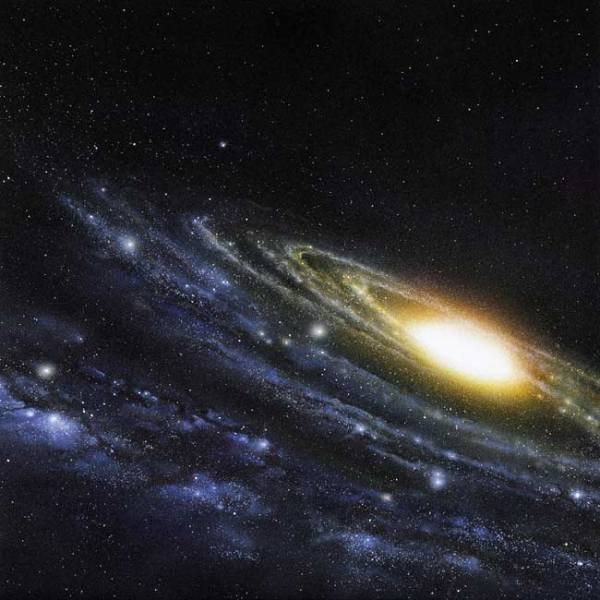
“We’ve got to evolve to a higher form in order to survive…This form we’re in right now is just too primitive. We have to evolve into something higher, more angelic form…Intelligence is what makes us special, isn’t it? Moths can’t screw up the world. Catfish can’t screw up the world. It takes intelligence to do that.” – Julie
“In that case, what do you make of your daydream quest? As you head into the universe to learn how to live, are you looking for angels?…” – Ishmael
“No…I’m looking for intelligent races just like us – but they know how to live without destroying their worlds…It’s like we’re specially cursed…” – Julie
“This is why, in your daydream, it’s necessary to look elsewhere in the universe for the knowledge you seek. You can’t find it amongst yourselves, because you’re a ‘cursed’ race. To find the knowledge you need to live sustainably, you need to find a race that isn’t cursed. And there’s no reason to suppose that everyone’s cursed. You feel that someone out there must know how to live sustainably…”
“The ‘curse’ under which you operate is very, very localized….It doesn’t even remotely extend to the whole of humanity. Thousands of peoples have lived here sustainably, Julie. Without difficulty. Without effort.” – Ishmael
– From My Ishmael, by Daniel Quinn
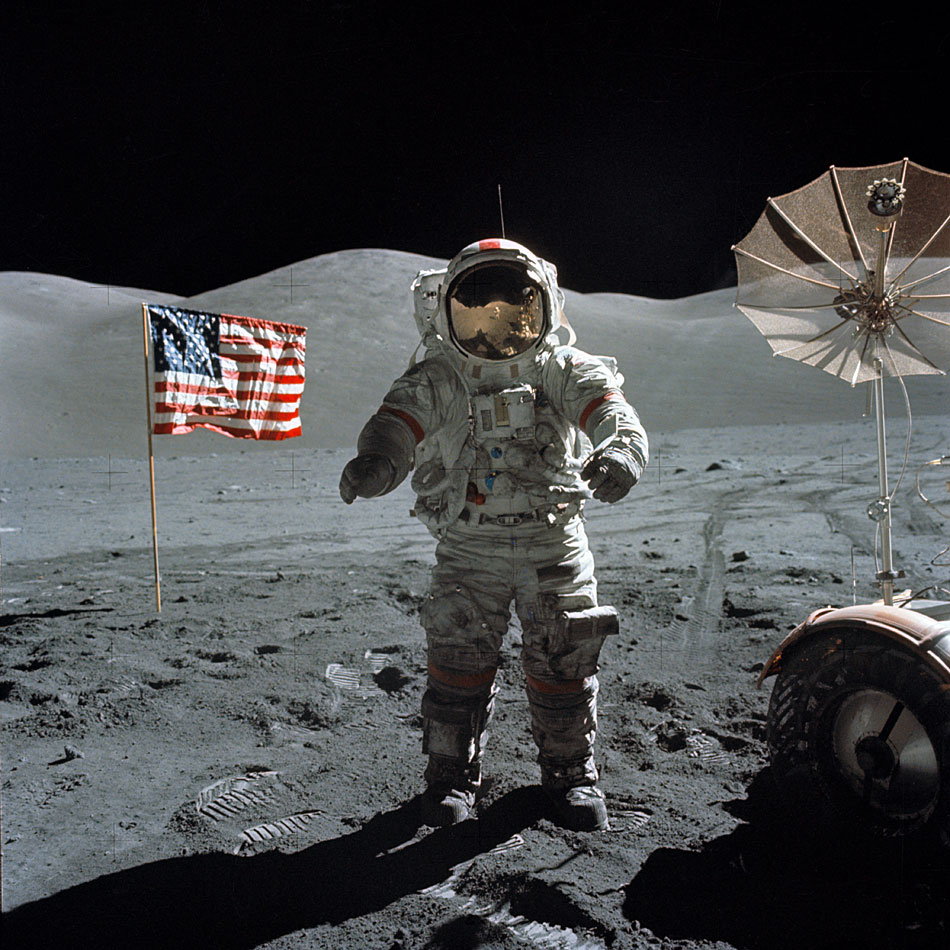
Since the dawn of civilization, the dominant perception of our place in the Cosmos is to explore, to extend our race out to every corner of the Earth, and our imaginations have been filled with dreams of leaping the planet to continue the odyssey out into space. We believe that the exponentially accelerating advances can only continue, that we will rapidly approach a level of technological achievement that will allow us a place in the stars, joining the community of advanced civilizations amongst the galaxy and beyond, and we have no need to look back. It is as if we believe this is hardwired into the nature of intelligence in the universe – that it is the destiny of all intelligent life.
The history of Western Civilization is replete with the stories of explorers crossing the vast oceans, over and across distant lands, to “discover new worlds.” As we know now, the history of civilization here on Earth has been written by the minds of the civilized, where to the countless indigenous cultures, all the explorations and discoveries of this history were a nightmare of conquest and slaughter. This is because the conceptual belief of civilization is to dominate what it conquers and explores. It is because the way of civilization that has evolved from the beginning is to believe in the myth that domination is some how equal to progress, that Nature, and hence the universe entire, is to be explored, tamed, and conquered to our liking. And, our stories only naturally reflect this.
This leads only to arrogance of our species. It leads to a blind faith in our abilities. The culture of civilization, wrapped in the confidence in our technological advancements, is blinded to our true place in Nature. As we have reached out into space, we have forgotten that it is our symbiosis with this planet and all of the natural world that has allowed us to exist at all. This belief in our dominion has become intertwined with our dreams of conquering the vastness of space, yet the true laws of Nature will forever keep us held down until we begin to recognize that it is only our conciliation with it that will allow us to have a place in the Cosmos at all.
The systems of civilization, laced with delusions of grandeur and progress, have broken with the symbiosis we once had during our origins. We have forgotten how to live at peace with the world. Our economic systems, our social systems, our religious systems, our political systems, and so on, are at war with Nature, rather than in union with it. The only connection to the Cosmos has been to attempt to bend it to our will. For us to have a chance at truly reaching for the stars, we must begin to heal the damage we have done to her, and to our souls. We must return to being at peace with the world. We need to have a connection, once again, to the Universe. We can gaze out into space, in awe of its majesty all that we please, but we will never get there unless we make this connection.
The entire history of space science and exploration has only been possible by those cultures who have exploited the most out of the bounty of the Earth. And this pattern can only continue as long as the dominant culture is permitted to exist. Most of the world is shut out of the adventure. Our population is headed straight past the carrying capacity of what this planet can support. The portion of the human race living every day with poverty and struggle is exponentially growing as the dominant culture devours the last resources of the planet.
This delusion of human progress, birthed at the dawn of civilization itself, has lead us to a state where there is not one system on this good Earth that is free of a state of decline. Ecological collapse, oceanic collapse, global climate change, the peaking of all major resources, and on and on, are leading us into our own black hole, that very soon will suck us into a singularity of extinction, and along with it will go the dreams of exploring space.
As we continue on the path of self-destruction, our arrogance only seems to grow stronger. A greater faith in our technologies develops, ignoring what Nature is telling us. It seems that if we can survive at all, after the dust has settled, there will not be much of a human race left. If we achieve a society of space voyagers, the vast majority of us will not be around to enjoy the glory. As it is today, the dominant culture ensures that it is only the minority that takes the step “for all mankind.” If we are to explore the Cosmos as one species together, we will have to conquer our cultural hang-ups first.
As Ishmael tells his young student, Julie, our delusions have brought us to the desperation of imagining that somewhere, out there, someone knows how to live at peace with Nature. Someone has been able to solve the problem of self-destruction, and allowed their species to explore space. Even part of our imaginations reflected in movies and books projects this fantasy – that some day these extraterrestrial beings will let us in on this secret, and we will be saved from ourselves. We mistakenly believe that we can find these answers and solutions within the same story we’ve been following up to now – the same story that got us into the calamity we face today. But, we need not look out into space for this answer. We only need to look back at ourselves, and to our true history of how we were at one time, in complete synchronicity with our world.
Are there such peoples out there somewhere in the Universe? When one understands the magnitude and vastness of the Cosmos, when one understands the basis of life, when one understands the physics and chemistry that is ubiquitous throughout all space & time, the answer to this question can be an overwhelmingly positive possibility. With over one hundred billion stars in our galaxy alone, and over one hundred billion galaxies in the known Universe, the chances of intelligent life developing is astoundingly high.
But, what does it take for a race of beings to achieve this status of having a true place amongst the stars? As mentioned above, the first step is to achieve peace with ones own planet without destroying it, and themselves along with it. Part of the answer has to do with what has been the key to success or failure of all past civilizations here on Earth. It is surely our acquisition, exploitation, and use of resources, but primarily it is the employment of energy.
This concept of relating the use of energy and the expansion of intelligent peoples into space is not new. The same concept is used in the study of collapsing of past civilizations here on Earth. The study of the evolution of our use of energy leads scientists of all genres to come to the same conclusion that without the proper use of energy, a civilization goes no where. It is always a profound loss of food energy, human energy, domesticated animal energy, kinetic energy, steam energy, chemical energy, fossil fuel energy, nuclear energy, and so on, that causes a civilization to collapse into chaos. Some had fallen back on other, less complicated forms, but it is always the need for energy that keeps civilization going and growing. And, as we in the Transition Culture are fully aware, it is our current use of energy that is creating the trap that will extinguish our chances of going anywhere.
In 1964, Russian scientist, Nikolai Kardashev, developed the concept of measuring the growth of civilizations expanding into the Cosmos, basing it correctly upon the use of energy. He classified civilizations into three main categories. A Class I civilization would have achieved the complete use of the entire energy output of the home planet, and would be in a completely efficient and stable form that is sustainable only if the civilization decides not to grow from there. A Class II civilization would have had the need to expand beyond the energy capabilities of the home planet, and have harnessed the entire output capacity of its home star. And, finally, once the civilization decided that it needed to grow from that point, it would move to a Class III civilization, of what Kardashev referred to as a “galactic civilization,” where they have now achieved the entire energy output of either regions, or sectors, of the home galaxy, or even the entire galaxy itself.
Through the development of the S.E.T.I. project, or the Search for Extraterrestrial Intelligence, this concept from Kardeshev was broken down into sub-categories, particularly by the famed astronomer Carl Sagan, where its number system was taken out to incorporate a decimal system. In the seventies, Sagan and others concluded that at that time we were about a 0.7 civilization – not quite at the level of Class I. However, Sagan and others in the project were not so naive, and strongly suggested that we could very easily slip into a lower position, even to 0.0, which equates to complete collapse. The S.E.T.I program, searching for radio signals that they believed would emanate from civilizations of higher class ratings, believed that even with the vastness of space and the statistical use of the class system, there still may be a chance that they may never find the proof they so painstakingly searched for, because maybe, like us, most civilizations grew beyond their carrying capacity, never becoming at peace with their home planet and each other, and had self-destructed.

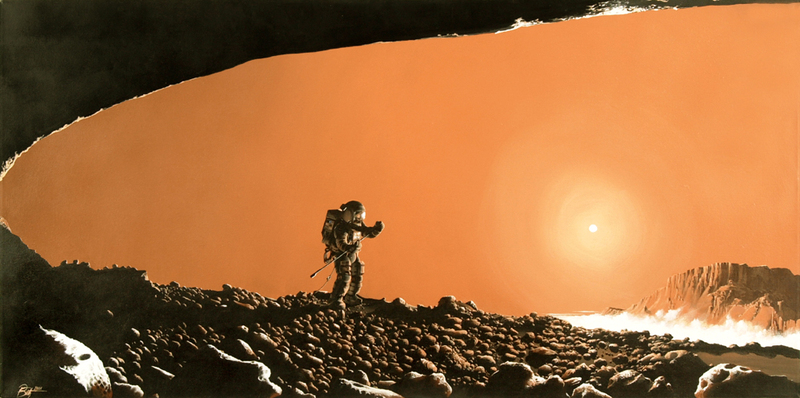
In our local environment, in our own solar system, which has been thoroughly explored, we have discovered possible planets and moons that we believe may be possible to colonize some day. We imagine colonizing the surface of the Moon, harvesting the water discovered at its poles, or the Helium 4, necessary for the prospect of fusion energy here on Earth. We dream of someday exploring Jupiter’s moon Europa, with its possible shell of ice covering the surface, where underneath a vast ocean of life, kept alive by volcanic activity, is awaiting our brave explorers. We imagine going to Mars, where the possibility of transforming it back into a living, breathing planet through the process of terraforming, will allow us to inhabit the planet, truly beginning to colonize the solar system. Yet, through this scientific study of changing Mars to suit us, we develop models of how it can be done, where in each and every model, efficiency, sustainability, and symbiosis all must be a part of the plan.
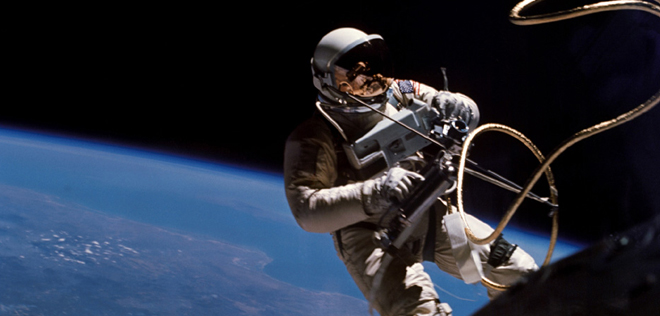
Even in our travel locally around Earth, we must create an environment for the occupants of our crafts that is as efficient and self-sustainable as possible, for us even to have the hope at going elsewhere amongst the planets. We are blind to this fact that although we have not understood the importance of efficiency and sustainability with our home planet, we certainly realize we must provide it to the astronauts we fling out into the blackness of space. We certainly understand that it must be done in order for us to colonize the solar system and beyond. Why not here?
Again, we must return our thoughts and minds back to Earth. Our reality draws us much closer to home. Gaia whispers in our ears the solutions, yet today, we don’t listen to her wisdom. For even if we are to have the right to look out into space and dream of a place there, we must acknowledge that we have had no respect for our home that has given us life, that has even allowed for us to have the ability to dream at all. If we are to join the community of civilizations that just might be out there, we must begin to think more of how we ought to live here, how we should live at all. If there is anything that has allowed any intelligent civilizations to flourish in the Universe, it has been through wisdom and reflection such as this.
We must not look to some mysterious signal from space or monumental arrival of extraterrestrial beings for answers, or wait for some savior race to rescue us – we must rescue ourselves first. We must start making our planet inhabitable before we claim any right to inhabit other worlds. We must begin to redesign how we live on this planet, just as we design our spacecraft, basing our interaction with the world as efficiency, sustainability, interdependence, and symbiosis. If we are to even consider us to be an intelligent race, we must demonstrate it in the first place. Otherwise we will remain “lost in space” forever.
We do have the ability to achieve the various stages of Kardashev’s classes of civilizations in the Universe, but only if we become wise. Is it wise to use vast amounts of precious energy to launch just a few of us into the punishing coldness of space? Is it wise to power our space probes with plutonium, the most poisonous element known to man, an element that just a mere, few kilograms could wipe out the human race if one of these crafts exploded in our atmosphere? Is this “progress”? And, as said above, if we are to make it at all as a species to the end of even this century, is it “progress” that most of the human race and most of the life on this planet, must suffer and die so that only a few of us can explore the Cosmos?
You see? We have just projected the same element of the sick, destructive culture that dominates our lives, our planet, and our souls into the project of space exploration thus far. We waste and we poison for a glory we have no right to experience.
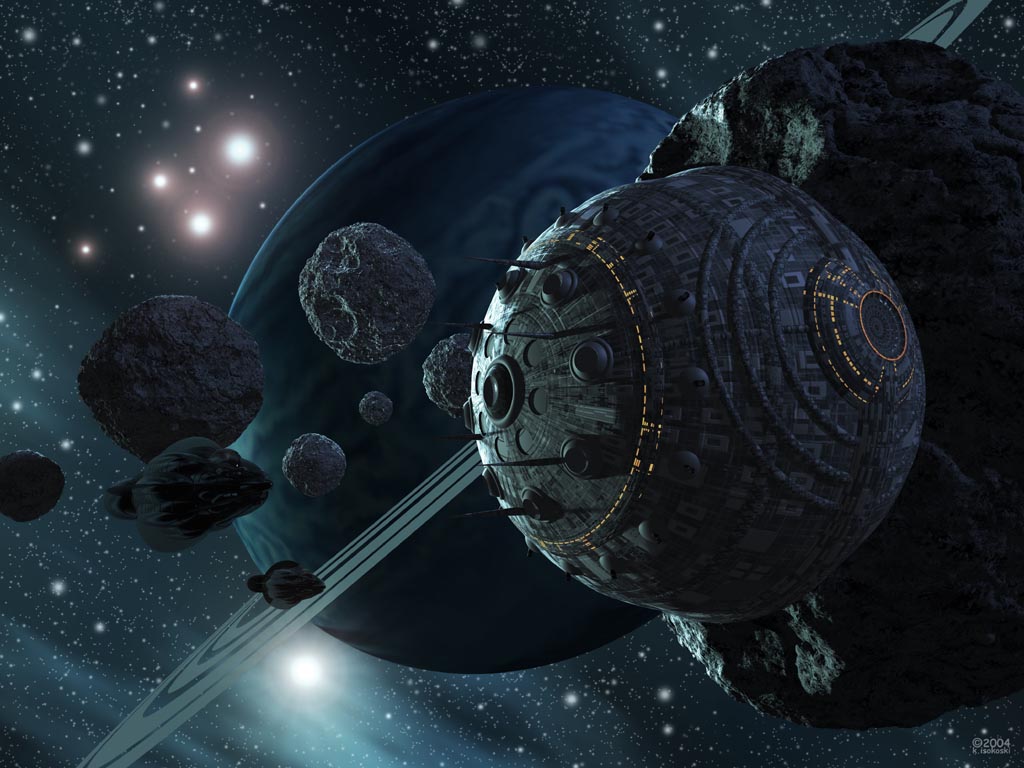
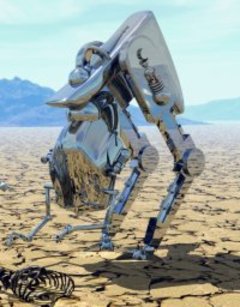
If there is a dream that many of us in the Transition Culture have about the future of space exploration, it is more like a looming, surreal nightmare. It is of an arrival of a projection of some truly wise culture from the depths of space. A robotic probe arrives to our atmosphere a few centuries from now, sent in search of intelligent life. It studies our air, our water, and our land. It discovers a wasteland of our former civilization, slowly being consumed by a healing planet, healing itself of a once omnipresent disease of dominion we unleashed upon it. It becomes utterly puzzled by what it has found. Its grand mission seems a failure, at least for this corner of the galaxy. In its computations it concludes that there is no intelligent life here on Earth, and it leaves us behind, lost in space.




 Gabracadabra Studios
You must be logged in to post a comment.